Walk three positions before a window-light portrait
Scout beside the window, inside the room and along its edge before asking the subject to wait.
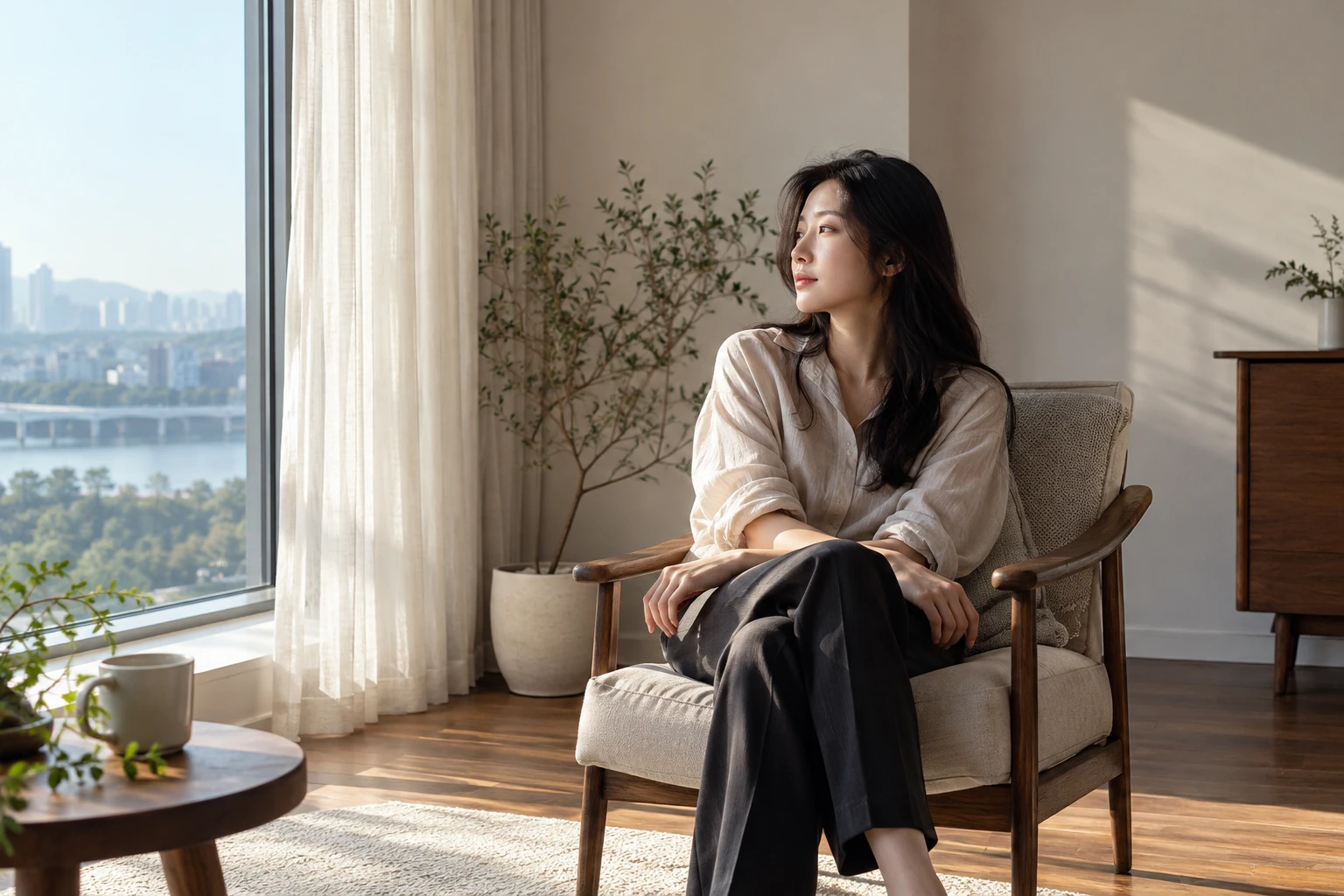
First distinguish direct sun from sky light
A window is not always a soft source. Direct sunlight can leave sharp boundaries, while light from the sky without direct sun behaves differently. A partly closed curtain does not automatically soften the light: it can reduce the lit opening or redirect illumination. Examine what is actually glowing.
Let the photographer walk before moving the subject
Check light at face height beside the window, then step into the room to inspect floor and wall bounce. Finally move beside the window’s edge to find a comfortable gaze direction. Note furniture and external obstructions. The route is a scouting guide, not a sun-position forecast.
A window-light scouting route
This route guides checks in the actual room rather than applying an effect to a photograph.
- Beside the window
Inspect face-height illumination and shadows from the window frame.
- Inside the room
Check wall and floor bounce, plus available camera distance.
- Along the window edge
Find space for the gaze and a comfortable place for the subject.
Order the session around the available moment
Secure important face portraits before moving to hands, objects and wider scenes. Recheck exposure as clouds pass rather than trusting an earlier reading. Mark positions and keep waiting short, especially with children and families. Preparation leaves room to capture a real expression.