Ten ways to understand light
One question per article. From shadow edges to glasses reflections and sensor timing, each lighting principle has its own example.
These photorealistic AI images illustrate lighting ideas. They are not measured photographs from a controlled shoot. Calculators use the assumptions stated beside them.
 01 · Source size
The edge of a shadow starts with source size
More output does not soften a nose shadow. Read the size of the emitting surface as the face sees it.
The emitting surface seen from the face ↗ 02 · Face orientation
A portrait lighting atlas written in nose shadows
Loop, Rembrandt, split and butterfly describe where light and shade land on a face, rather than a shopping list of equipment.
Four lighting patterns in photographs ↗ 03 · Shadow density
Control the shadow without switching on another lamp
White reflectors, black boards and white walls send existing light along different paths.
What is visible in this photograph? ↗ 04 · Light color
Why two lights set to 5600 K can render skin differently
Separate source temperature, camera white balance, tint and mixed illumination.
A neutral-patch workbench ↗ 05 · Reflection paths
Keep the eyes visible behind glasses
The white rectangle in a lens is not necessarily an exposure problem. Trace its route back to the camera.
Three checks for a glasses portrait ↗ 06 · Subject and background
Give the background its own lighting job
Assign the key, background light and rim light different areas instead of letting every source illuminate everything.
The jobs of the three lights in the photograph ↗ 07 · Group uniformity
Why the front row is bright and the back row is dark
Softness and even coverage are separate conditions. Use row distances to understand uneven illumination.
Front-to-back illumination calculator ↗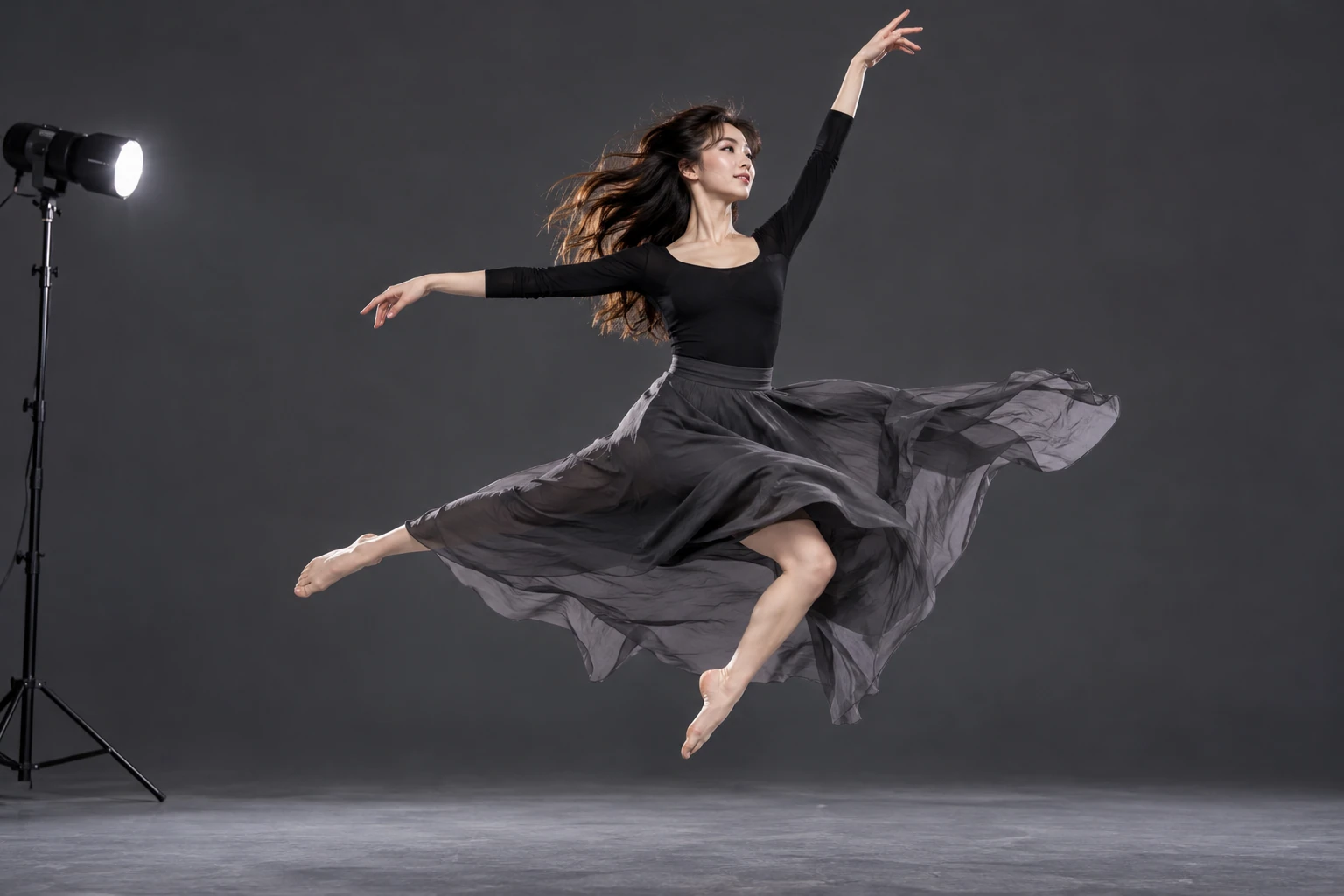 08 · Light and time
How a flash freezes a moving moment
The interval when the shutter is open can be longer than the interval when the subject receives most of its light.
A shutter-and-flash timeline ↗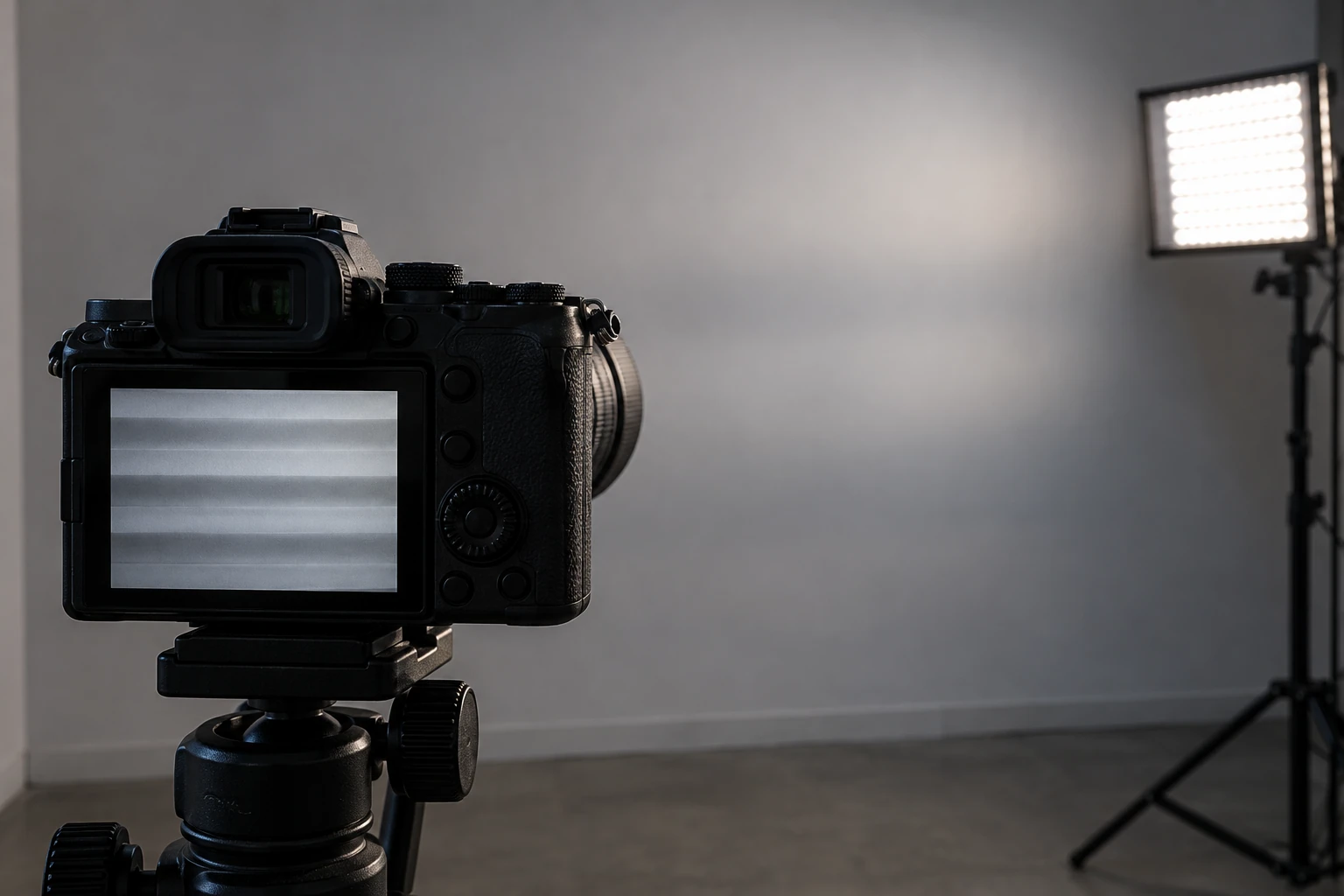 09 · LEDs and sensors
Invisible flicker, visible bands
Changing LED output and sequential sensor readout can produce bands rather than simple underexposure.
Different rows, different sampling times ↗ 10 · Window-light scouting
Walk three positions before a window-light portrait
Scout beside the window, inside the room and along its edge before asking the subject to wait.
A window-light scouting route ↗